Choosing between dental implants and dentures feels overwhelming when you’re facing tooth loss. Both options can restore your smile, but they work differently and offer distinct benefits depending on your situation.
At Lotus Dental Associates, Dr. Nhung Phan helps Fort Mill patients understand their tooth replacement options through a judgment-free consultation process. We take an airway-focused approach that considers not just your immediate needs but also your long-term oral health and overall wellness.
Understanding Dental Implants
Dental implants replace both the root and crown of a missing tooth. A titanium post is surgically placed into your jawbone, where it fuses with the bone over several months. Once healed, a custom crown is attached to the post, creating a restoration that functions like a natural tooth.
This option provides the most stable and permanent solution for tooth loss. According to the National Library of Medicine, dental implants have a success rate of 95%, making them highly reliable for long-term tooth replacement. Implants can replace a single tooth, multiple teeth, or support a full arch of teeth through implant-supported dentures.
The biggest advantage of implants is their ability to preserve your jawbone. When you lose a tooth, the bone in that area begins to deteriorate because it no longer receives stimulation from chewing. Implants prevent this bone loss by functioning like natural tooth roots, maintaining your facial structure and preventing the sunken appearance that often develops with dentures over time.
Understanding Dentures
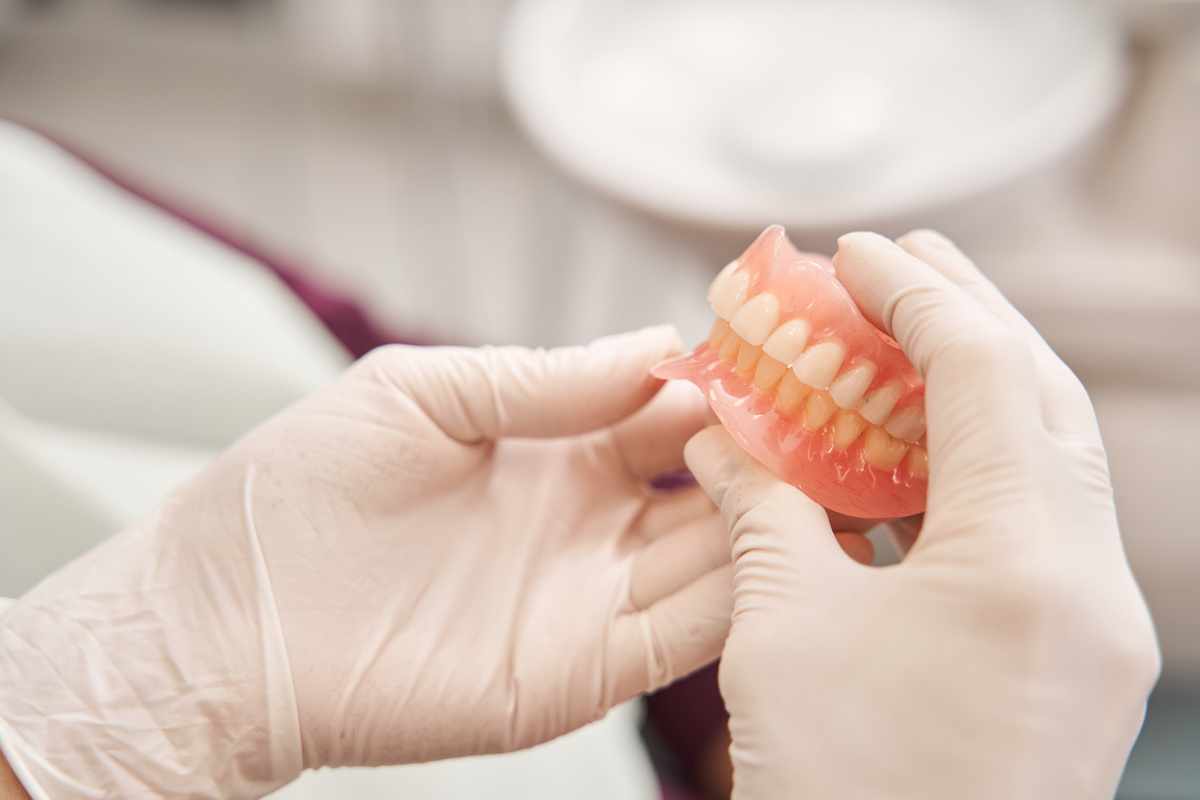
Dentures are removable appliances that replace missing teeth. Partial dentures replace several missing teeth and attach to your remaining natural teeth with metal clasps. Complete dentures replace all the teeth in your upper or lower arch and rest directly on your gums.
Modern dentures look remarkably natural and restore basic eating and speaking functions. They’re custom-made to fit your mouth and match the color and shape of your natural teeth. Many people successfully wear dentures for years with proper care and regular adjustments.
However, dentures require maintenance and eventual replacement as your mouth shape changes over time. They may slip or click when you eat or speak, especially in the first few weeks as you adjust to wearing them. You’ll also need to remove them nightly for cleaning and to give your gums time to rest.
Comparing Stability and Function
How They Feel and Function
Implants feel and function like natural teeth because they’re anchored directly into your jawbone. You can eat whatever you want without worrying about your teeth shifting or falling out. There’s no learning curve for speaking or eating, and you don’t need to change your oral hygiene routine beyond regular brushing and flossing.
Dentures take time to adjust to and may never feel quite like your natural teeth. You may need to avoid certain foods that are too hard, sticky, or chewy. Some people develop sore spots where the denture rubs against their gums, requiring adjustment visits to your dentist.
Maintenance Requirements
Dental implants require the same care as natural teeth. You brush twice daily, floss once daily, and visit your dentist for regular cleanings and exams. There’s no special maintenance routine or additional products needed beyond your normal oral hygiene supplies.
Dentures need to be removed and cleaned daily with special denture cleaner. You’ll also need to clean your gums and any remaining natural teeth. Most people soak their dentures overnight in a cleaning solution. As your mouth changes shape over time, you’ll need periodic adjustments and eventually complete replacement every five to eight years.
Cost Considerations
The upfront cost of dental implants is higher than dentures. A single implant can cost several thousand dollars, and replacing multiple teeth becomes a significant investment. However, implants typically last 20 years or more with proper care, making them cost-effective over time.
Dentures have a lower initial cost, but you’ll need to factor in ongoing expenses for adjustments, relining, and eventual replacement. These costs add up over the years, potentially making dentures as expensive as implants in the long run.
At Lotus Dental Associates, we offer flexible payment options including CareCredit, LendingClub, and Cherry financing to make both treatments accessible. We also have an in-house wellness plan for patients without insurance benefits.
Health and Lifestyle Factors
Your overall health plays a role in determining which option suits you best. Dental implants require oral surgery and a healing period of several months. You need adequate jawbone density to support the implants, though bone grafting can address this issue in many cases. Certain health conditions like uncontrolled diabetes or active gum disease may affect your candidacy for implants.
Dentures work for almost everyone regardless of health status or bone density. They don’t require surgery and can be fitted relatively quickly. This makes them a good option if you need immediate tooth replacement or prefer to avoid surgical procedures.
Your lifestyle matters too. If you’re active and want a permanent solution that doesn’t require special care, implants may suit you better. If you prefer a reversible option or need a more budget-friendly solution immediately, dentures might be the right choice.
Making Your Decision
Consider these factors when choosing between implants and dentures:
- Budget and timeline: Implants require a larger upfront investment and several months to complete, while dentures cost less initially and can be ready within weeks.
- Bone health: Implants preserve your jawbone and facial structure, while dentures may contribute to gradual bone loss over time.
- Maintenance preference: Implants are permanent and care for like natural teeth, while dentures are removable and require special cleaning routines.
- Long-term goals: Implants typically last decades with proper care, while dentures need replacement every five to eight years.
- Physical comfort: Implants feel and function like natural teeth immediately, while dentures require an adjustment period and may never feel exactly like natural teeth.
Some patients choose a combination approach. Implant-supported dentures use several implants to anchor a full arch of dentures, providing more stability than traditional dentures while costing less than replacing every tooth with individual implants.
Find Your Best Solution at Lotus Dental Associates
Both dental implants and dentures can successfully restore your smile, but the right choice depends on your unique situation. Dr. Nhung Phan evaluates factors like your oral health, bone density, budget, and lifestyle preferences to recommend the most appropriate option.
Our team in Fort Mill provides personalized restorative dentistry solutions in English and Vietnamese, ensuring clear communication throughout your treatment. Contact us today to schedule a consultation and discover which tooth replacement option will help you achieve the healthy, confident smile you deserve.